
Hillsborough City Directory Collections Located
A Hillsborough city directory collections search usually begins with three small clues: a surname, a village name, or an old address copied from a family paper. No single township set covers every household. So the work compares regional volumes against newspapers, yearbooks, and public records. Start with the likely community label. Then record each address and notation, and test every hit against an independent source. That discipline turns a shaky household hint into a proven Hillsborough residence. It also makes a missing listing useful instead of misleading.
| Collection | Years | Where held | Access |
|---|---|---|---|
| Somerville City Directories | 1917-1984 | SCLSNJ Bridgewater in print and microfilm; Somerville local-history resources | Ask staff for the volume or reel and confirm its sections |
| Plainfield City Directories | 1902-1982 | SCLSNJ Bridgewater | Regional comparison only, not a Hillsborough substitute |
| New Brunswick City Directories | 1968-1987 | SCLSNJ Bridgewater | Regional comparison only |
| Hillsborough High School yearbooks | 1975-present | SCLSNJ Hillsborough branch | Former-student and activity leads, subject to library access rules |
Directories from Plainfield and New Brunswick sit nearby on the shelf. Use them to frame questions, not to build a township-wide roster. They are comparison collections only. Before an entry counts as a lead, a Hillsborough researcher should preserve the volume title, year, page, spelling, and any village label attached to the name. Note: A Hillsborough directory omission is likeliest for rural addresses, temporary households, and people recorded under another Central Jersey place name.
Hillsborough City Directories at SCLSNJ
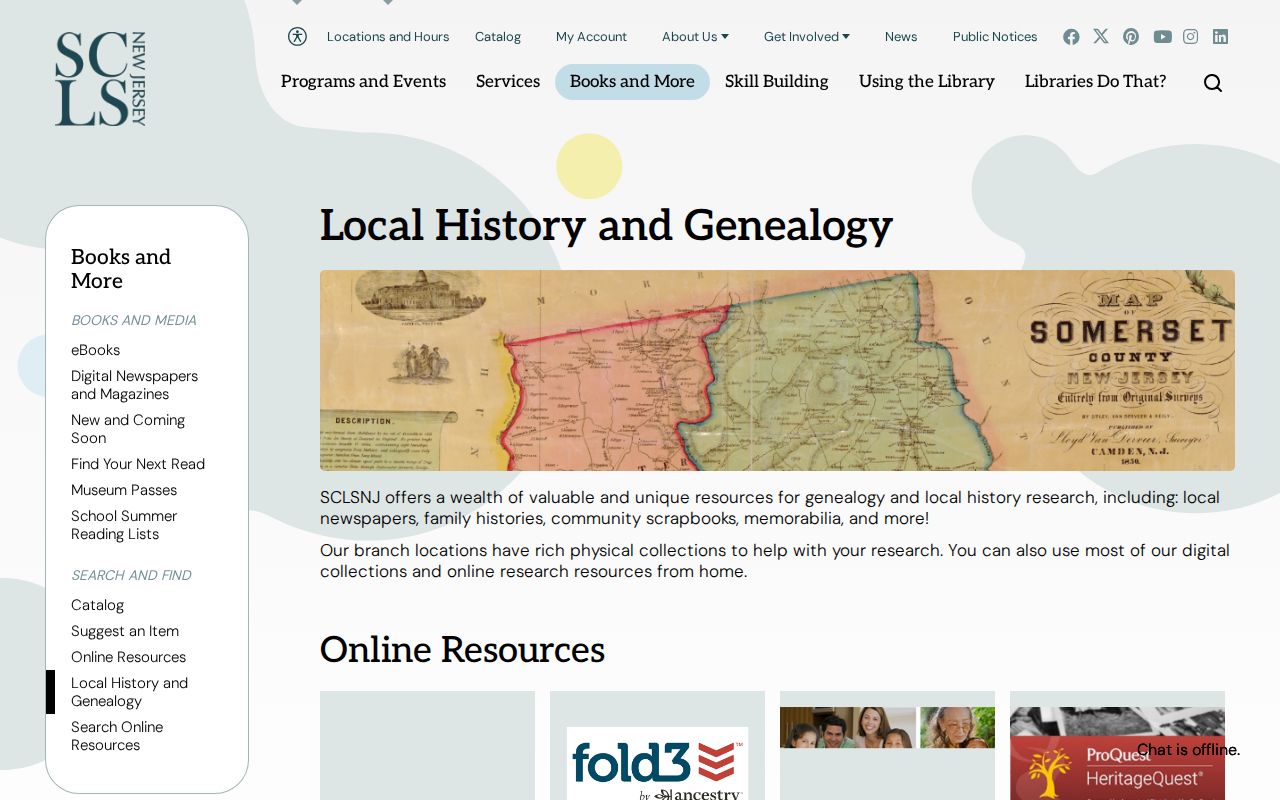
A directory alone gives one thin slice of a year. The library's local-history network surrounds it with annual context. For Hillsborough family research, SCLSNJ lists the Hillsborough Beacon from 1979 through 2007. It also lists Courier-News affiliated titles from June 2, 1884 to the present, and Messenger-Gazette affiliated titles from October 16, 1823 through June 2007. Those microfilm runs can place a Hillsborough surname beside a school event or a property sale. A name can also appear beside an obituary, a church notice, or a civic item. Search a name with a street, a village, and a date range. The local-history collection also holds clippings, maps, cemetery material, and county veterans' grave registration cards. The SCLSNJ local-history and genealogy collection is the best first stop for the documented regional shelf. Its companion material sits nearby on the same shelves.
Ask at the desk for the Somerville volume or the newspaper reel, then compare the same name across several years before drawing any conclusion about a Hillsborough household. One year proves little on its own. Somerville local-history contact information lists somerville@sclibnj.org and (908) 458-8445. Staff can help identify the right resource for a Hillsborough request, while the volume itself remains the authority on page structure and township relevance.
Hillsborough City Directory Village Labels
The township name is only the start of a Hillsborough search. Local materials also name Belle Mead, Blackwells Mills, Flagtown, Neshanic, and South Branch as communities. Any of those labels can surface in a newspaper. It can also surface in a church record, a family file, or a postal line. Neshanic sometimes appears as Neshanic Station. Search each spelling on its own. Then reconcile the result with a Hillsborough address, a legal description, or a census place. Only after that should it fold into a family timeline. This is a records quirk. It is not a claim that the five communities had separate directory runs. It explains why a person can show up in a regional title. The modern Hillsborough Township wording may be missing from that entry. The same comparison helps when a road name, post office, or newspaper index seems to point at a neighboring community.
Reading a Hillsborough City Directory Entry
No public digital viewer displays a Hillsborough or Somerville directory page, so the items below are an on-volume verification checklist rather than claims read from a seen record. Start at the branch. Identify the publication year first. Check whether the volume has an alphabetical section, an address or reverse section, and an abbreviation key. Photograph or cite a Hillsborough-related page only under the library's rules.
| Name field to verify | Surname and given name, including initials or alternate spellings. |
|---|---|
| Family notation to verify | Spouse or widow notation, if that volume prints it. |
| Work detail to verify | Occupation, business, or employer wording, if the entry includes one. |
| Address field to verify | Street and number, plus any printed household or occupancy mark. |
| Section and symbols to verify | Alphabetical or reverse placement and the abbreviation key used by that volume. |
- Criss-cross directory
- A directory arranged by street and number rather than by surname. The actual Somerville volume must be checked to confirm whether that format is present.
- Householder index
- A section that may identify the principal person attached to an address. It is not proof that every person at the address was listed.
- Abbreviation key
- The printed guide that explains shorthand used in that volume. Read it before assigning meaning to a single letter or mark.
Hillsborough City Directories and Yearbooks
Hillsborough High School yearbooks date from 1975 to the present. They offer a different kind of former-resident lead. A yearbook places a student in a class or club at a point in time. It cannot confirm a home address. Pair a yearbook name with a Beacon, Courier-News, or Messenger-Gazette item. Then move to a public custodian when a Hillsborough address or property question needs verification. That keeps a school-memory source in its proper role. Newspapers also fill the years where no usable directory entry exists. A marriage notice, estate item, property sale, obituary, or organization notice can suggest a date range. Try that range against a directory reel or a census search. Note: A Hillsborough name match is only a starting point. The township carries several village and postal labels.
Trace Hillsborough City Directories With Census
Federal census schedules are public through 1950. The 1960 census opens in 2032. That long gap makes the 1917-1984 Somerville directory run, Hillsborough newspapers, and Hillsborough yearbooks valuable as dated clues, though regional coverage still demands care. A census supplies household, age, birthplace, and other decennial context. A directory usually offers a yearly Hillsborough address or work snapshot. Neither proves continuous residence by itself.
- Start with the earliest verified Hillsborough surname, village label, or address in a directory volume.
- Record the exact spelling, page, street, and every notation that the actual volume prints for the Hillsborough household.
- Check adjacent directory years for moves, name changes, or a different community label.
- Pair the result with the nearest public census year through 1950, keeping the census household separate from the directory entry.
- Use newspaper notices, yearbooks, obituaries, or deeds to test the years between the two sources.
A directory from decades past can point you toward a name, but it cannot prove where someone lives now. For a current, person-specific confirmation, turn to the official sources described on the Hillsborough resident lookup page instead of treating a regional volume as proof of today's address.
Hillsborough City Directory Leads at Van Horne
When the library shelf leaves a Hillsborough surname or village unresolved, the Somerset County Historical Society's Van Horne Library is the deeper local fallback. Its collection holds more than 1,300 bound volumes. More than 400 family files sit alongside them, plus manuscripts, maps, photographs, microfilm, and early deeds. A request should name the person, the date range, family members, and a place such as Hillsborough, Belle Mead, Flagtown, or Neshanic. Treat a family-file reference as a lead only. Check it against a Hillsborough deed, census, church register, or newspaper before you rely on it.
The Van Horne Library collections page describes the holdings that can supplement any Hillsborough city directory search. Its descriptions cover the family files and bound volumes in depth.
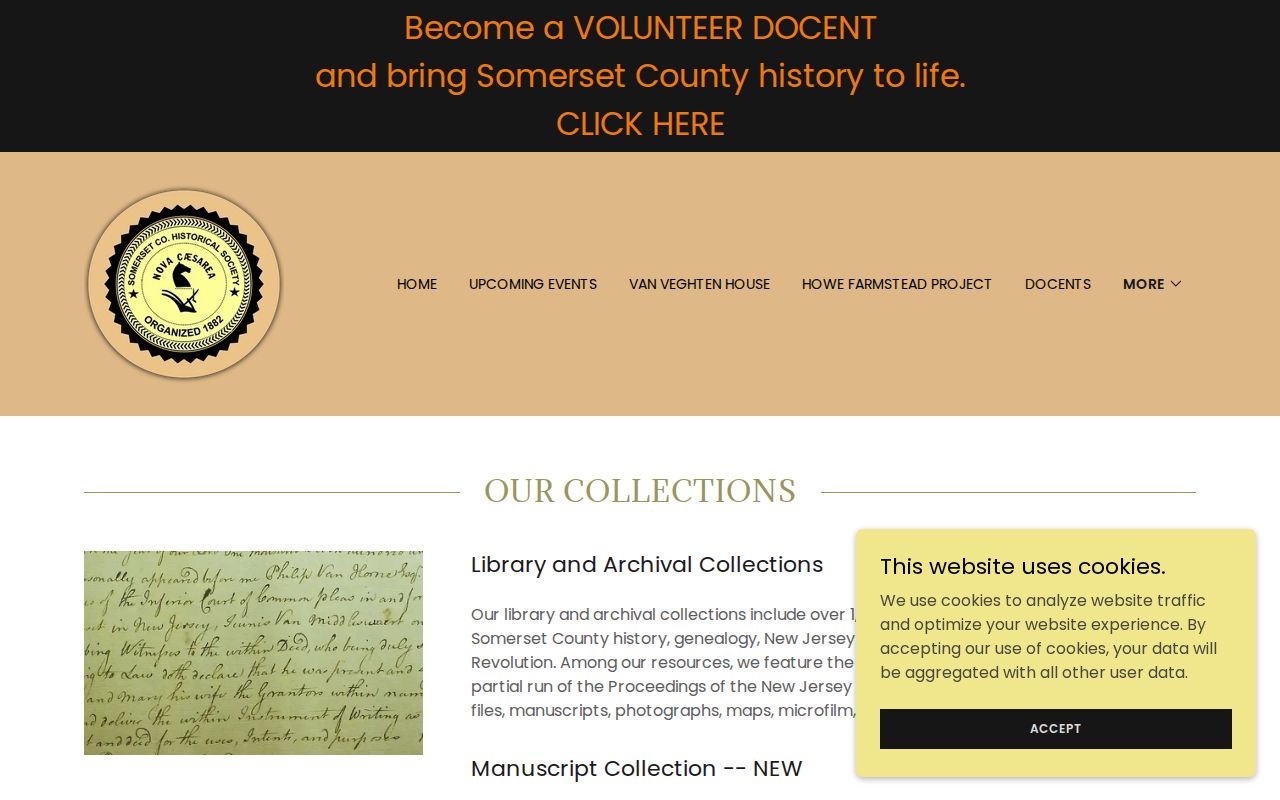
The holdings bridge gaps that a regional directory leaves open. They are especially rich in maps, manuscripts, family files, and early land material tied to a Hillsborough household.
Van Horne sits at 9 Van Veghten Drive in Bridgewater. Hours are Tuesday from 11 a.m. to 3 p.m. The site is also open the second and fourth Saturday from noon to 3 p.m. Limited research is available through info@somersethistorynj.org or (908) 218-1281. The listed service costs $30 for two hours. It includes up to 10 copies, with a typical turnaround of five to eight weeks.
Hillsborough City Directory Archive Routes
Local shelves and family files sometimes still leave an older Hillsborough person or place unresolved. The New Jersey State Archives catalog is the state-level route at that point. Its collections reach from 1664 to the present. They cover county, municipal, federal, and non-governmental material. Somerset surrogate books begin in 1804. Research at the State Archives is free by appointment, though reproduction fees apply where charged. That makes it a strong fallback for one specific Hillsborough family or record. It is not a wholesale substitute for a directory run.
Before 1917, the useful question changes. Ask which surviving record can place this household, not which city directory covers Hillsborough. Deeds, surrogate material, census schedules, church and cemetery clues, newspapers, maps, and archival records will outperform a local directory that was never documented in the first place. Note: a Somerville Sanborn collection nearby exists, but it does not establish that a direct Hillsborough Sanborn run exists.
Hillsborough City Directory Context Through Time
Hillsborough received its Royal Charter in 1771. The first township meeting after the charter convened on March 10, 1772. Early minutes from those gatherings name public roles such as clerk and tax collector. They also list constable and road overseer. That is different evidence from a city directory entry. Still, it explains a practical reality for researchers. Hillsborough records from before the regional directory era sit dispersed among township, county, and state custodians rather than in one place.
- 1771: Hillsborough received its Royal Charter.
- 1772: The first township meeting after the charter recorded early public offices.
- 1917-1984: SCLSNJ's verified Somerville City Directories provide the documented regional directory span.
- 1975-present: Hillsborough High School yearbooks add a local former-student source.
- 1950 and after: Census access stops at the public 1950 schedule until the 1960 release scheduled for 2032.
For Hillsborough family history, the strongest result is a chain of dated records with each limit stated plainly. That beats a single unverified directory line every time.